
Interdisciplinary studies UC Berkeley Admission
Interdisciplinary studies UC Berkeley Admission
The University of California, Berkeley is globally recognised as one of the most prestigious public research universities in the world, renowned for its academic excellence, innovation, and intellectual freedom. Among its many academic strengths, interdisciplinary studies stand out as a defining feature of Berkeley’s educational philosophy. Interdisciplinary studies at U C Berkeley allow students to integrate knowledge, methods, and perspectives from multiple academic disciplines to address complex real-world problems that cannot be adequately understood through a single field of study. In an era marked by rapid technological advancement, global challenges, and interconnected social, political, and environmental systems, Berkeley’s interdisciplinary approach equips students with the analytical flexibility, creativity, and critical thinking skills necessary for leadership in the modern world.
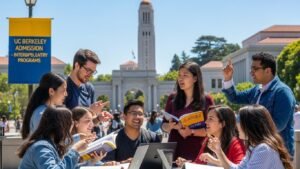



Interdisciplinary studies UC Berkeley Admission
Interdisciplinary studies at U C Berkeley are not confined to a single department or college; rather, they are embedded across the university’s academic structure. Berkeley offers a wide range of interdisciplinary majors, minors, research initiatives, and special programs that encourage students to explore the intersections between sciences, humanities, social sciences, engineering, and professional fields. Programs such as Cognitive Science, Environmental Economics and Policy, Data Science, Global Studies, Political Economy, and American Studies exemplify Berkeley’s commitment to crossing traditional academic boundaries. These programs are designed to foster intellectual curiosity while preparing students to problems from multiple perspectives, combining theory with practical application.
Interdisciplinary studies UC Berkeley Admission
The academic philosophy behind interdisciplinary studies at U C Berkeley is deeply rooted in the belief that complex societal challenges demand integrated solutions. Issues such as climate change, economic inequality, public health crises, and technological ethics cannot be fully addressed through isolated academic lenses. For example, environmental studies at Berkeley integrate biology, chemistry, economics, political science. Students studying climate change may examine atmospheric science alongside environmental policy, ethical considerations, and economic impacts, enabling them to propose informed and realistic solutions.
Interdisciplinary studies UC Berkeley
Research plays a central role in interdisciplinary studies at U C Berkeley. As a leading research institution, Berkeley provides students with access to cutting-edge laboratories, research and interdisciplinary institutes. Undergraduate and graduate students alike are encouraged to participate in research projects that span multiple disciplines, allowing them to work alongside faculty members who are leaders in their fields. This hands-on research experience strengthens students’ academic foundations while enhancing their problem-solving and teamwork skills.
Another key aspect of interdisciplinary studies at U C Berkeley is its emphasis on experiential learning. Berkeley strongly believes that learning extends beyond the classroom, and interdisciplinary programs often incorporate internships, fieldwork, service learning, and global study opportunities. Students may engage in community-based research, public policy internships, or international exchange programs that connect academic knowledge with real-world practice. For example, students in global or development-focused interdisciplinary programs may work with international NGOs, or government agencies, gaining valuable insights into global challenges while applying interdisciplinary frameworks.
Faculty collaboration is another cornerstone of interdisciplinary education at U C Berkeley. Professors from different departments frequently co-teach courses, supervise interdisciplinary research projects, and develop joint curricula. This collaborative teaching model exposes students to diverse academic perspectives and methodologies, encouraging them to think critically and question assumptions. Faculty members at Berkeley are not only subject-matter experts but also active researchers, policy , and innovators, which enriches the interdisciplinary learning environment and connects theory with practice.
Interdisciplinary studies at U C Berkeley also play a vital role in preparing students for diverse career paths. Employers increasingly seek graduates who can think across disciplines, adapt to changing environments, and communicate effectively with professionals from different backgrounds. Berkeley graduates with interdisciplinary training are well-positioned for careers in technology, public policy, education, healthcare, environmental management, business, law, and academia. The ability to information, complex systems, and propose innovative solutions gives Berkeley students a competitive advantage in the global job market.
In addition to career preparation, interdisciplinary studies foster personal and intellectual growth. Students learn to appreciate diverse viewpoints, challenge disciplinary biases, and develop a deeper understanding of how knowledge is constructed. This intellectual openness is a hallmark of Berkeley’s academic culture, which values debate, critical inquiry, and social responsibility. Interdisciplinary education encourages students to become lifelong learners who are capable of adapting to new challenges and contributing meaningfully to society.
U C Berkeley’s commitment to interdisciplinary studies is also reflected in its support for diversity, equity, and inclusion. Interdisciplinary programs often examine issues related to race, gender, culture, and social justice from multiple perspectives, combining history, sociology, political science, and cultural studies. This approach helps students understand the structural roots of inequality and empowers them to advocate for positive social change. Berkeley’s interdisciplinary initiatives foster inclusive scholarship that acknowledges the significance of diverse voices and experiences in shaping knowledge.
Furthermore, Berkeley’s location in the San Francisco Bay Area enhances its interdisciplinary offerings. The region is a global hub for technology, innovation, environmental activism, and cultural diversity. Students benefit from partnerships with Silicon Valley companies, research laboratories, public institutions, and nonprofit . These connections provide unique opportunities for interdisciplinary collaboration, internships, and real-world problem-solving that complement Berkeley’s academic strengths.
In conclusion, interdisciplinary studies at the University of California, Berkeley represent a forward-thinking approach to higher education that reflects the complexity of the modern world. By integrating multiple disciplines, fostering collaboration, and research and experiential learning, the University of California, Berkeley prepares students to address global challenges with creativity, critical thinking, and ethical responsibility. Interdisciplinary education at U C Berkeley is not merely an academic option but educational experience that equips students with the skills, knowledge, and values needed to lead and innovate in an increasingly interconnected society. Through its commitment to interdisciplinary scholarship, U C Berkeley continues to shape future leaders who are capable of understanding the world in all its complexity and contributing to meaningful and sustainable change.

Related Posts
UCSF Acceptance Rate
